
Cyrus Walker
For Cyrus Walker, painting is not merely a physical practice that produces an image but, in its best form, an alchemic one as well. Walker elegantly relates his practice to ‘building a cathedral out of sand.' His raw visual and conceptual materials are scattered enough that the process feels fragile in nature, but the end product is lent structure from the collective ideas and narratives that the viewer brings to the imagery contained in his work.
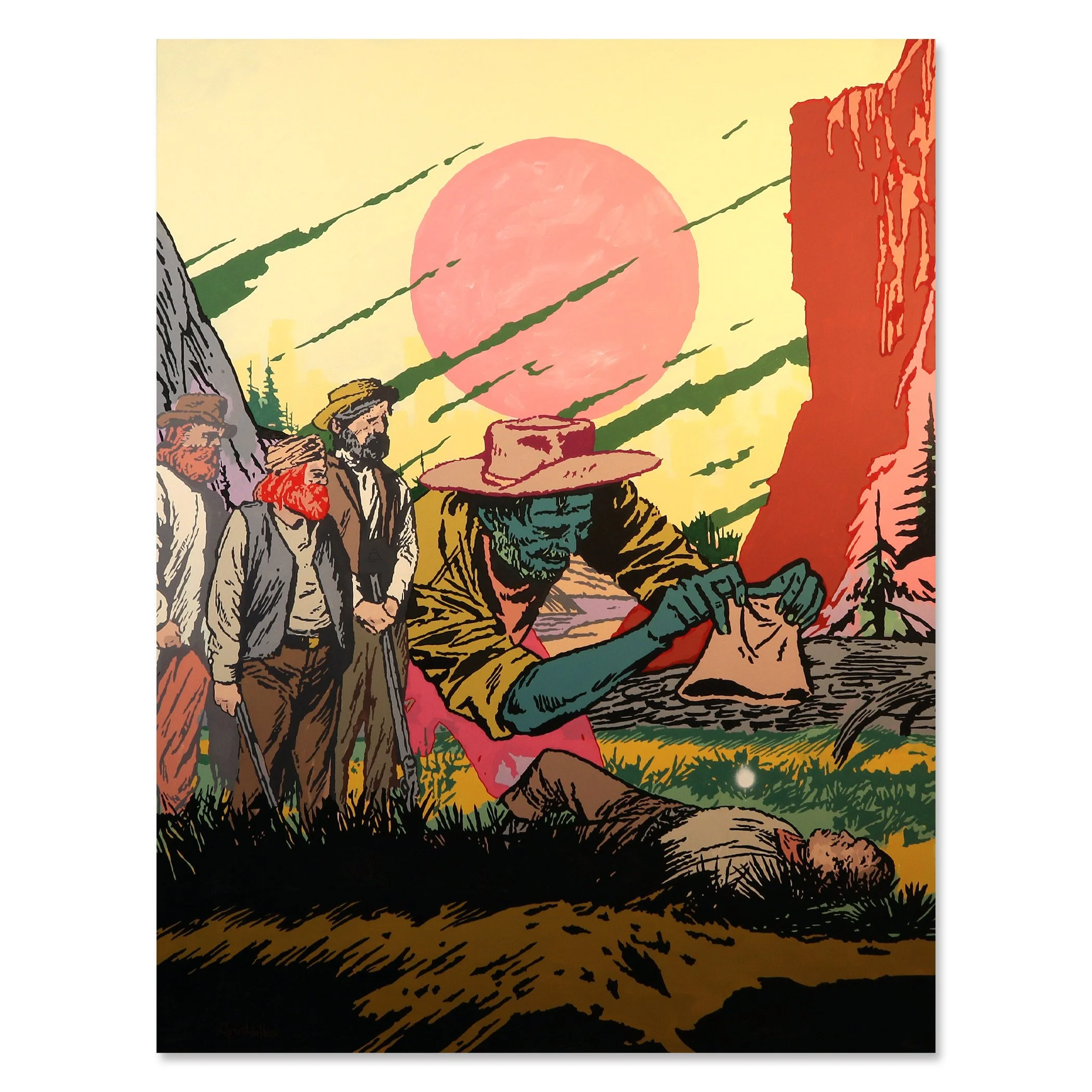
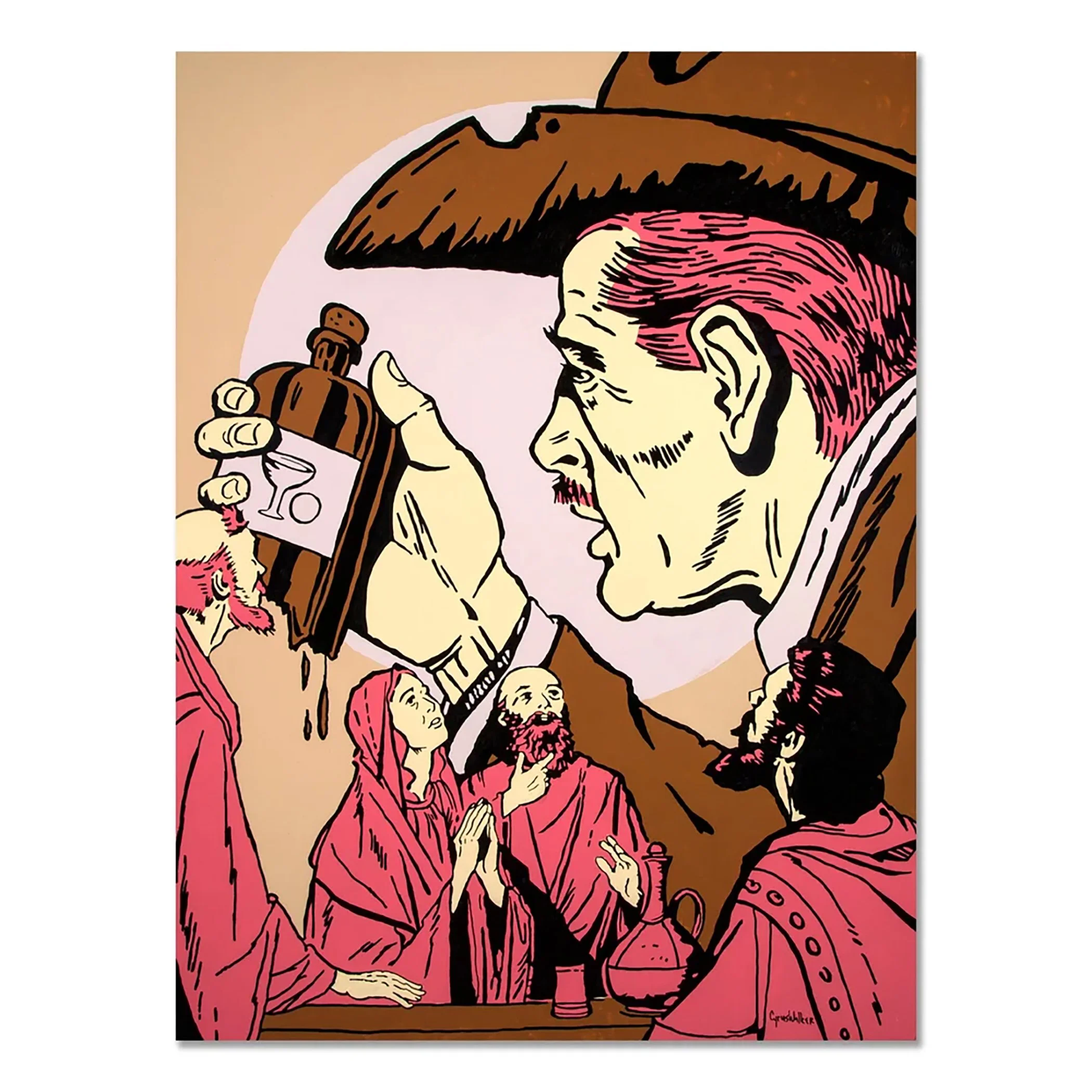
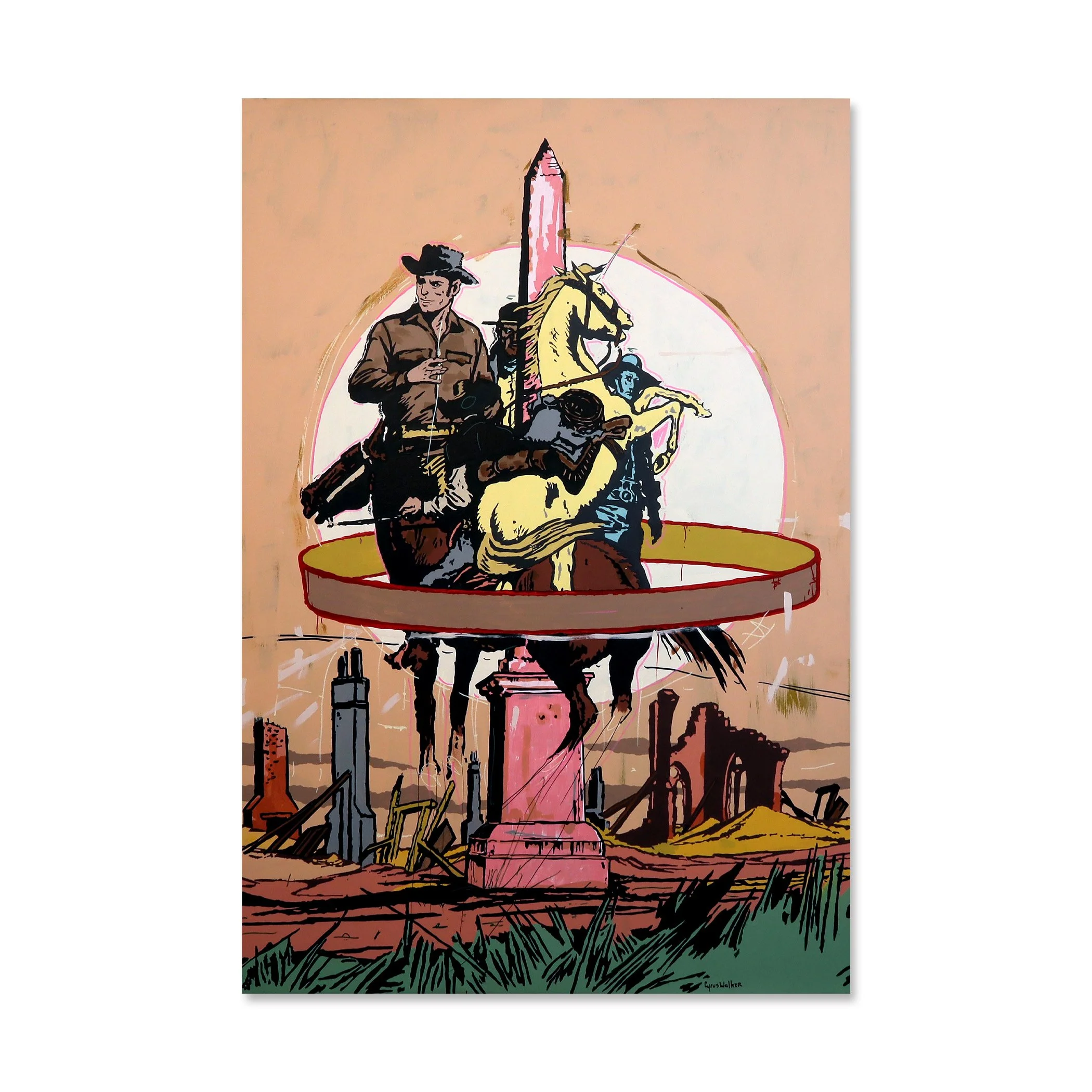
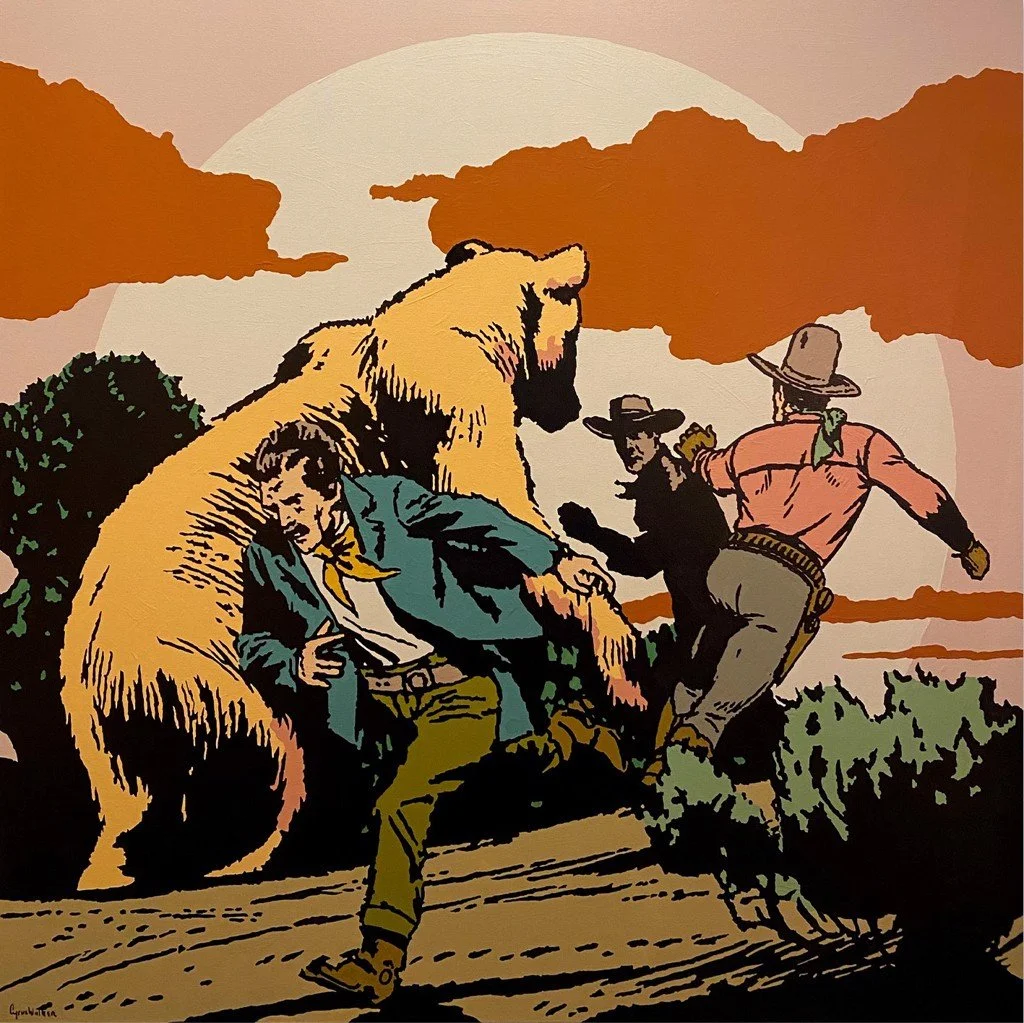
While Cyrus Walker's graphic paintings overtly reference recognizable imagery from Western Americana, a closer look at his pieces reveals a complex amalgamation of disparate themes, influences, and symbolism. From the aesthetics of Mid-Century American illustration to a wide range of philosophical, scientific, and religious texts, Walker pulls from an unlikely cohort of source material to forge visually and conceptually rich works that are greater than the sum of their parts. Walker is part artist, part philosopher, and the contents of the academic texts he absorbs seep back out of his consciousness and into his studio practice. Walker puts a great deal of himself into his paintings. Personal mythology is a recurring theme embedded throughout his body of work, and his self-reflective process results in works of art that feel viscerally relatable. And while his pieces are complexly layered with symbolism and abstract concepts, he prefers to leave most of their interpretation up to the viewer, preserving the immediacy of their emotional impact.
Trained as a graphic designer, Walker transitioned first to illustration, and then gradually but inevitably to fine art. When he first began painting, he approached the process almost like screen-printing, limiting his palette to just a few solid colors. While he no longer applies those constraints to his work, his design background still shines in his deft, exacting use of color.
Like many creatives, Walker finds it difficult to switch off the part of his brain that is perpetually churning over his work. But in his opinion, making art is perhaps one of the only vocations where it’s acceptable – and maybe even necessary – to always be ‘on the clock,’ constantly preoccupied with your work, even when you’re not in the studio. Life is short, and for an artist like himself, a life spent doing what he loves is one well spent.
Written by: Edith Willey